Go Back
Sewer Scope Inspections and Why Old New Jersey Homes Need One
A collapsed sewer lateral can cost five figures to dig up and replace. A camera finds it first.
 Jack Donlon
Oct 01, 2026
 Jack Donlon
Quick answer: A sewer scope runs a small waterproof camera down the home's main sewer line so you can see the actual condition of a pipe that is otherwise buried and invisible. It matters most on older New Jersey homes because the lateral running from the house to the street is often the original clay or cast iron pipe, and tree roots, cracks, or collapse in that line can cost many thousands of dollars to repair. A scope catches it before you buy.
I'm Jack Donlon of HomeCheck, Ltd, a Board Certified Master Home Inspector serving all of New Jersey. Between 35 years of buying and renovating property and thousands of inspections, the sewer line is one of the places I have watched people get burned the hardest, because it is completely hidden and it is completely their cost once they own the house.
A standard home inspection covers what is visible and accessible. Your main sewer lateral is neither. It runs underground from somewhere near your foundation out to the municipal main under the street, and there is no way to judge its condition by looking at fixtures inside the house. A toilet can flush perfectly on inspection day while the line beneath the front lawn is halfway to failure.
That gap is exactly why a sewer scope exists as a separate service. The camera gives us eyes on the inside of the pipe along its whole run.
New Jersey has a lot of housing built well before modern PVC sewer pipe. Many homes still have the original clay tile or cast iron lateral, and both age in predictable ways.
Mature trees along the older streets of towns like Montclair, Cranford, Collingswood, and Haddonfield are beautiful, and their roots are one of the most common things I see wrecking a clay lateral.
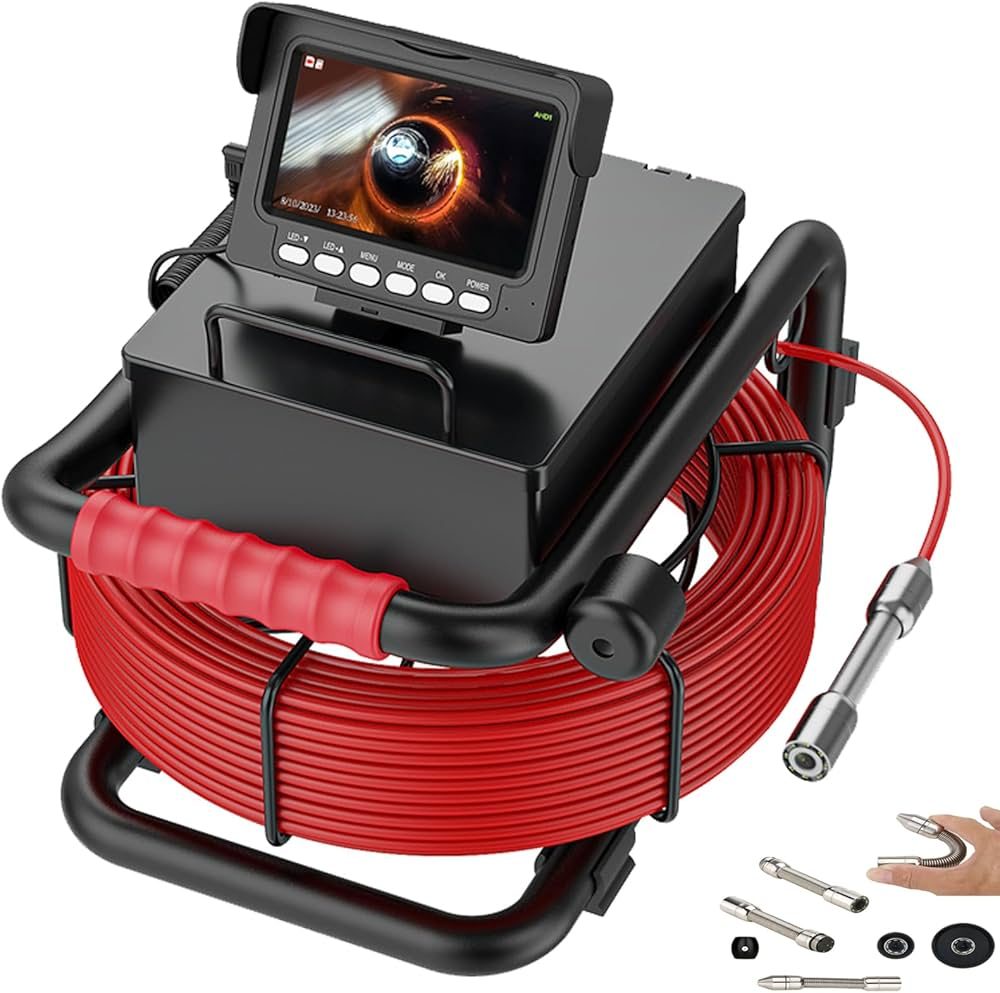
When I run the camera, you see what I see. We can identify root intrusion, cracks, separated joints, low spots holding water, and the pipe material itself. If the line is clean and sound, you buy with confidence. If it has problems, you have documented footage to bring to the negotiating table, and a rough idea of whether you are looking at a cleaning, a spot repair, or a full replacement.
Replacing a sewer lateral, especially one that runs under a driveway or out into the street, is one of the more expensive repairs a homeowner can face. Some New Jersey towns also hold the homeowner responsible for the portion of the lateral that runs out under the public street, which turns an already big job into a much bigger one once you factor in road cuts and permits. Knowing about it in advance changes the math on the whole purchase, and it lets you plan for the repair on your own timeline rather than in an emergency after a backup floods the basement.
I suggest a sewer scope on essentially any older home, any property with large trees near the sewer path, and any house where drains were slow during the inspection. On newer construction with modern pipe the odds of a problem drop, but even then buyers sometimes want the baseline.
Is a sewer scope part of a normal home inspection? No. It is a specialized add-on because the sewer line is underground and outside the scope of a visual inspection.
How old does a home need to be for this to matter? Any home with an original clay or cast iron lateral is a strong candidate, which covers a large share of older New Jersey housing.
What if there is a lot of root intrusion? Roots can sometimes be cleared and the line relined, and sometimes the pipe needs replacement. The footage helps you and a plumber decide.
Can you do the scope at the same time as the inspection? Yes. I coordinate it with the home inspection so you get one clear picture of the property.
Buying an older New Jersey home and want to know the shape of the sewer line before you own it? Call HomeCheck, Ltd at 732-792-4325 or email info@homecheckltd.com. I serve all of New Jersey and I will show you exactly what the camera finds.
The good, the bad, and the costly.
Board Certified Master Home Inspector · 35+ years of hands-on experience · Every inspection conducted personally · Serving all of New Jersey
Reserve a Time